
STREAM.fields 26 – final Symposium – Depot 27-11-2026
STREAM.fields 26 Symposium – FINALE 2026
27 Nov 2026 | Depot | Vienna [AT]
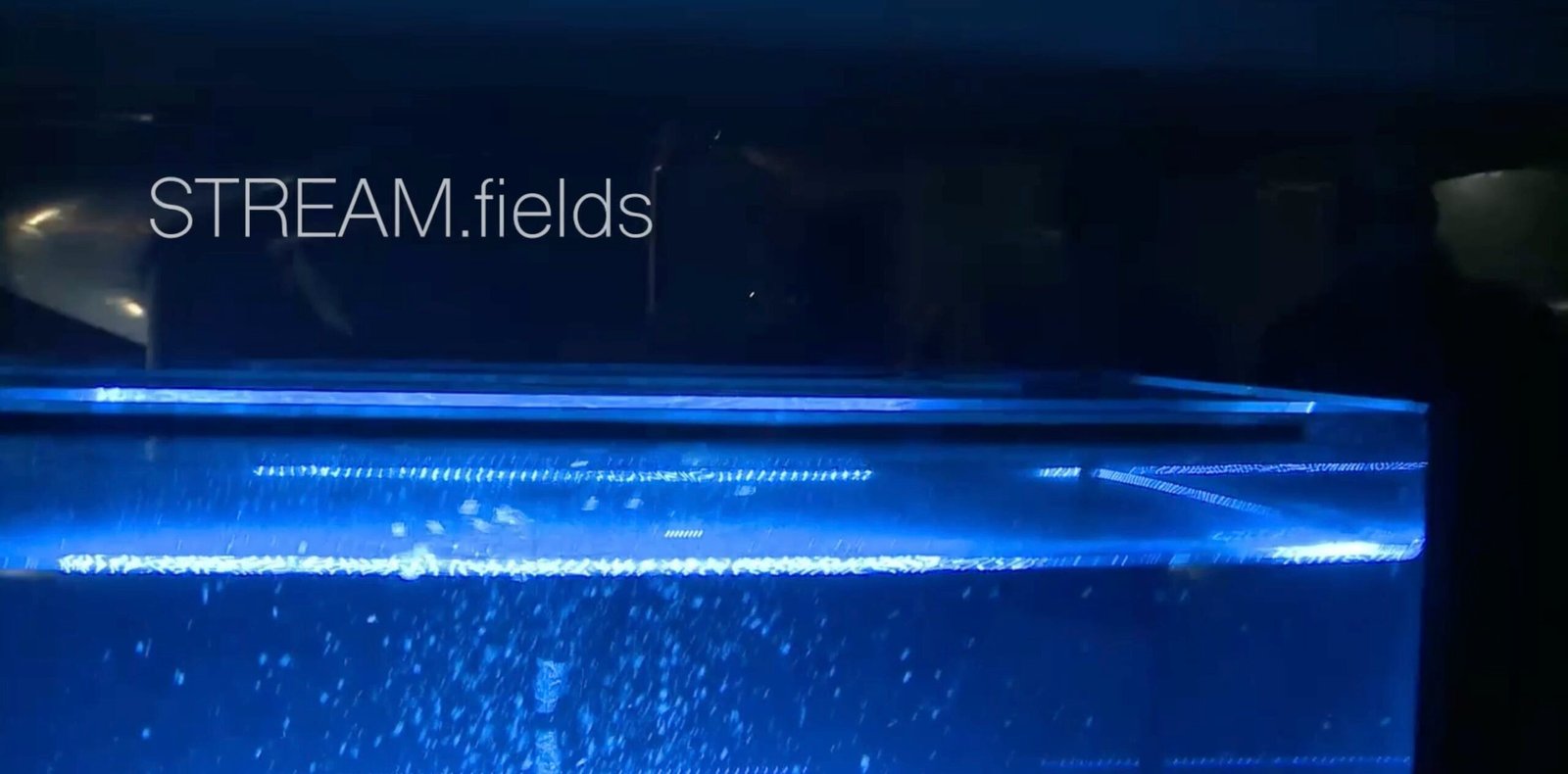
Final event of the international symposium STREAM.fields 26 – the discursive format of the mobile, transdisciplinary arts festival FLUVIALE, which has been travelling across Europe since June 2025 along the project route.
The final symposium in 2026 at the Depot will summarise the discursive journey with project presentations, a film screening, a panel discussion and a lecture- performance-concert.
PROGRAM
• 14:00 doors open – Welcome [ drinks & snacks ]
• 14:30 Opening and introduction
with:
Thomas J. Jelinek – artistic director and curator of FLUVIALE
Gertrude Moser Wagner – chair of the artistic board of FLUVIALE
Sabine Maier and Jennifer DeFelice – project curators of FLUVIALE
Julia Herzog – ART of CHANGE
Markus Fiebig – geologist / Professor of Quaternary Geology at BOKU (The University of Natural Resources and Life Sciences, Vienna)
Christoph Hubatscke – academic coordinator of the symposium and FLUVIALE
• 15:00 Reports and discussions
Experiences and processes from the first 16 months of FLUVIALE
with Thomas J. Jelinek, Jennifer DeFelice, Aiko Kazuko Kurosaki, Julia Herzog
15:00 COMMON GROUND – Arts & Science – Cooperations, communications and future projects
Markus Fiebig – geologist / Professor of Quaternary Geology at BOKU / talk with Thomas J. Jelinek
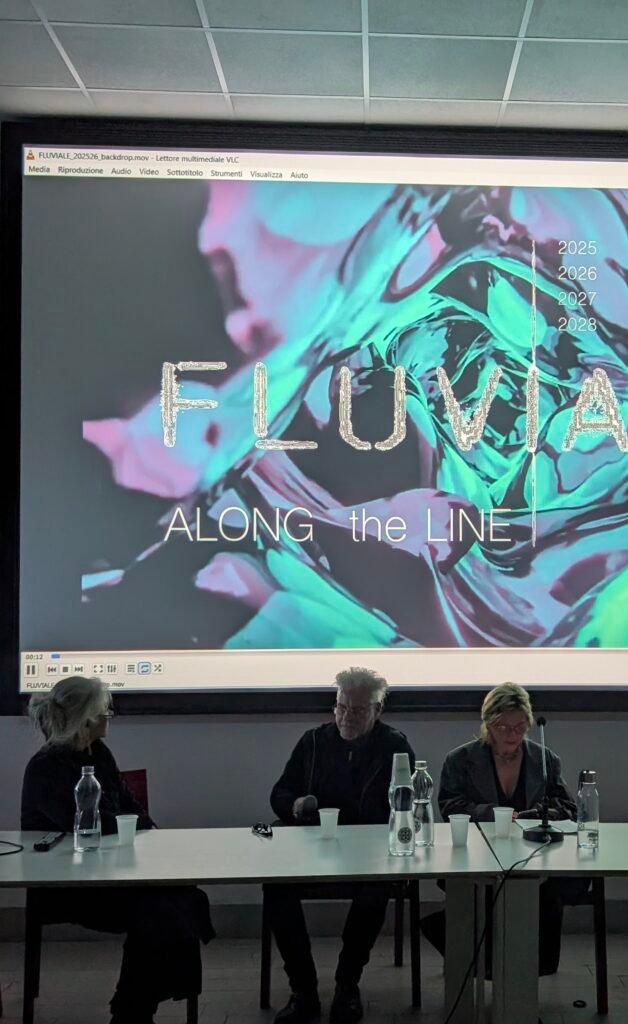
15:30 Film screening: „ALONG the LINE“: 16-month FLUVIALE, Documentary by Thomas J. Jelinek, 40 min.
––––––––––– COFFEE BREAK / PAUSE –––––––––––
• 16:45 Project – presentations / Lectures : MATERIAL CODES
16:45 > ReDefuse < Vulkan Project by Gertrude Moser-Wagner
17:15> SULFUR < by Marcella Barone
17:45 > unter uns / under us < by Sabine Grupe
––––––––––– COFFEE BREAK / PAUSE –––––––––––
• 19:00 LECTURES:
19:00 Julia Grillmayr – Introduction and moderation
19:15 Christoph Hubatschke – CODES of REALITY
19:30 Ramón Reichert – Algorithmic codes and digital commons
• 20:30 Panel discussion : CODES of CHANGE
Which codes determine and influence our reality, and which codes can change it?
Moderation: Julia Grillmayr
• 21:30 Performing CODES – Martin Siewert + Nikolaus Gansterer
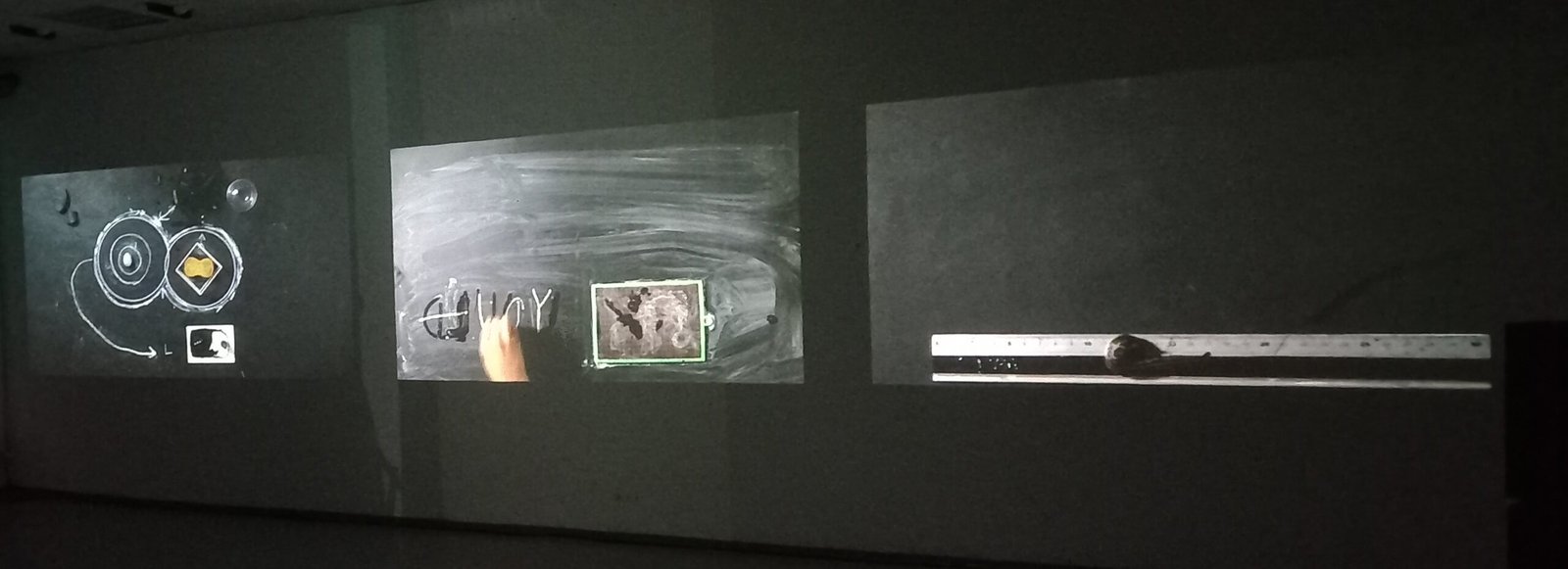
Project – presentations / Lectures : MATERIAL CODES
REDEFUSE
by Gertrude Moser-Wagner
This is a multifaceted multimedia project focused on the city of Catania and, in particular, on Mount Etna. The core of REDEFUSE lies in the idea of a ‘lava bomb’ being transformed into a political-social metaphor. Gertrude Moser-Wagner’s pacifist political stance makes the REDEFUSE project an anti-war statement.
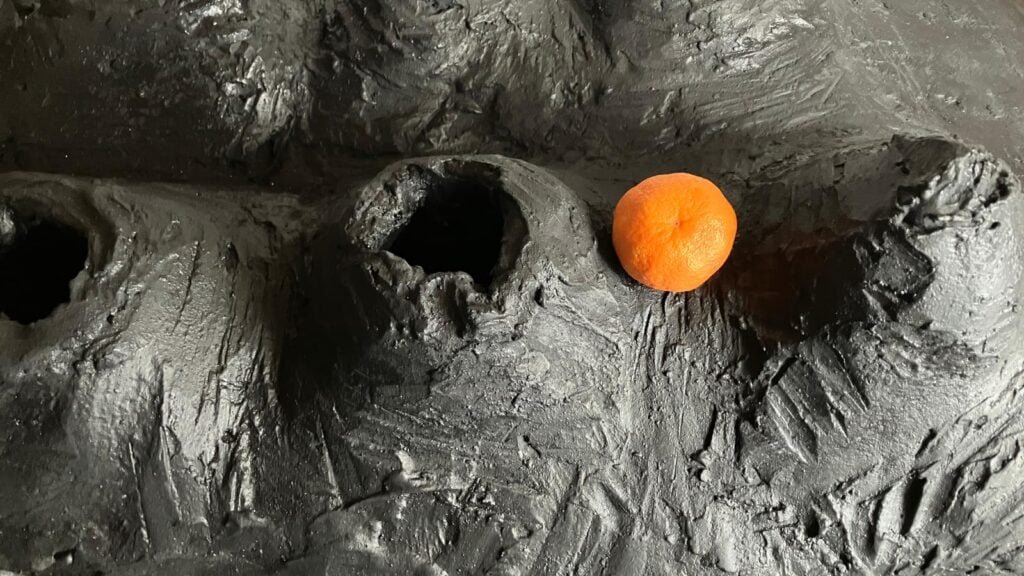
SULFUR
by Marcella Barone
The project intends to establish a link between the memory of a traumatic pre-industrial past— marked by human sacrifice in Sicilian sulfur mines—and the hyper-technological dynamics of underground extraction in Kiruna, along with their profound impact on local communities and landscapes, including the conflict over the grazing rights of the indigenous Sámi people and the relocation of the town. While Sicily preserves the painful historical memory of the *carusi*—children aged 6 to 14 who worked in sulfur mines—as part of a bygone pre-industrial and industrial economy now largely turned into museum exhibits or left to decay, Kiruna and its iron mine represent an epicenter of the ecological transition in a rapidly expanding present, one capable of redefining the urban and social landscape above the mining area. The phenomenon of sinkholes—common in mining regions—inspired the accompanying project, UNDER_BREATH. In Sicily, hydrogeological instability can sometimes lead to ground subsidence. A similar event occurred in Lapland, in Gällivare (75 km from Kiruna), on March 20, 2012, when a massive sinkhole nicknamed “Fabiangropen” caused significant upheaval.
Connecting the memory of the Mediterranean to the future of the Arctic gives rise to a process rooted in geographical, temporal, and conceptual dualities.
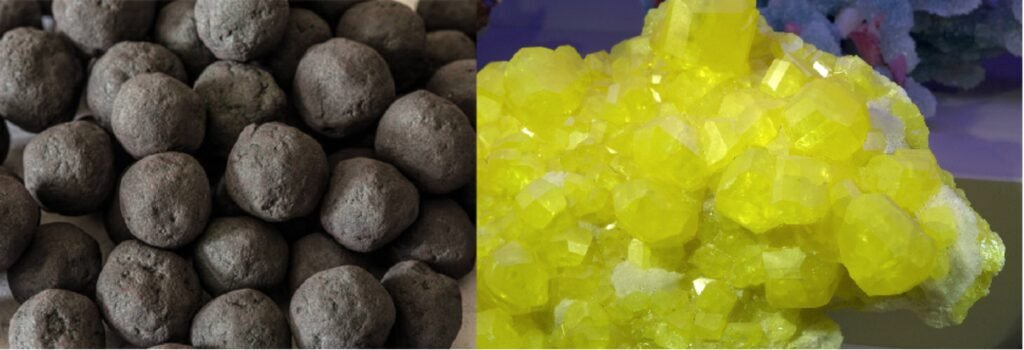
MATERIAL CODES : UNTER UNS / UNDER US
by Sabine Grupe [AT]
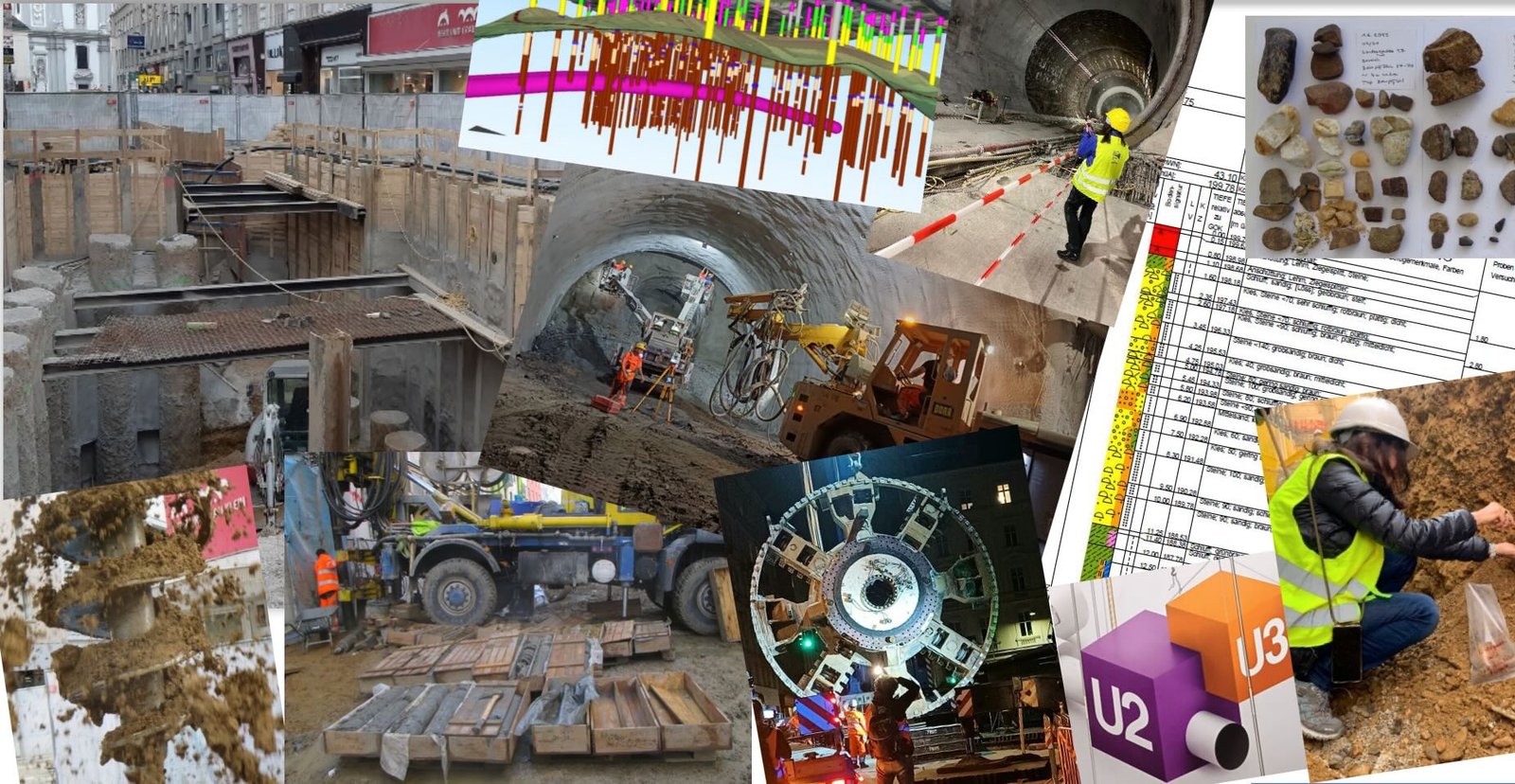
A scientific examination of human interventions in geological spaces and their social impacts on the micro-communities within the neighbourhoods, within the context of a primal urban spatial dynamic. Changes in flow directions and surface conditions resulting from alterations in depth and underground construction processes. A technical and socio-dynamic study – examples of the recoding of material codes.
LECTURES
CODES of REALITY
by Christoph Hubatschke
REALITY CAN WAIT
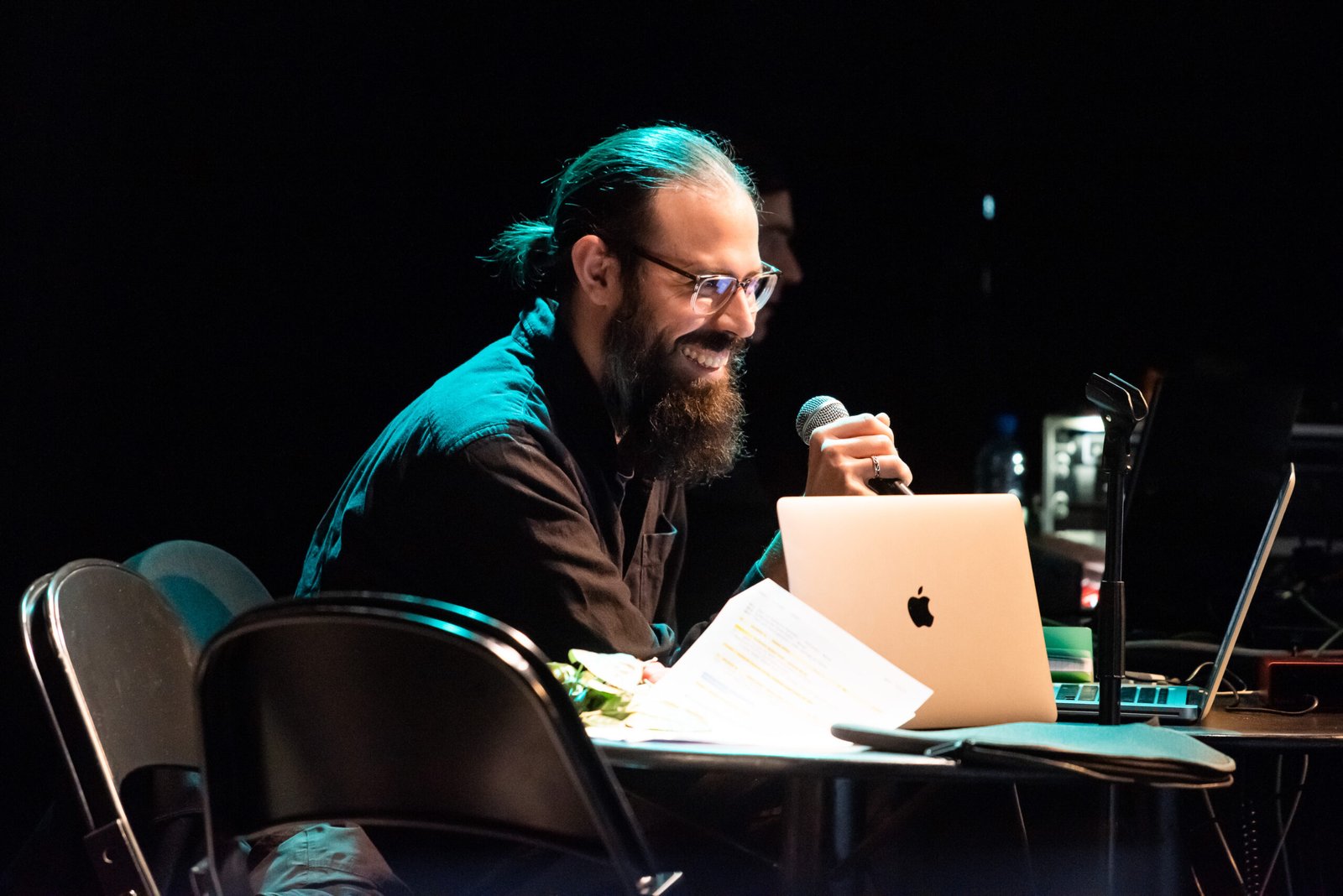
by Ramón Reichert
AI, Uncertainty, and the Art of Hesitation
The development of generative, multimodal, and agentic AI systems is transforming the relationship between perception, probability, and action. Through sensors, data streams, and digital interfaces, AI systems access their environments, interpret situations, and increasingly intervene in processes of action. Probabilistic models no longer serve merely to represent possible states of the world; they also become operative conditions for decisions and interventions. What appears probable can thus increasingly shape what actually happens.
The problem with agentic AI is not that it models reality probabilistically, but that its models increasingly help determine which possibilities can become effective within our shared world. This raises a fundamental epistemological and philosophical question concerning technology: What happens to openness, indeterminacy, and the not-yet-anticipated when technical systems are designed to translate uncertainty into probability and probability into action?
The talk proposes a philosophy of waiting as a response to this development. Waiting is understood neither as passivity nor as mere delay. Rather, it designates a distinctive way of relating to the world in which the determination of a situation in terms of particular meanings, expectations, and possibilities for action remains suspended. Unlike functional waiting, which serves to gather additional information or optimize a decision, this form of waiting opens a space in which not only answers but also the questions, goals, and presuppositions of action may remain undetermined.
In this sense, waiting is not simply the time between two actions but a practice of keeping possibilities open. Waiting is not the absence of a decision, but the possibility that the world may become other than we already expect it to be. It allows something to emerge that does not yet have a determinate place within existing models and their probabilistic expectations. The philosophical challenge, therefore, is not merely to scrutinize or interrupt algorithmic decisions, but to transform our technological relations to the world so that uncertainty is no longer treated exclusively as a deficit to be eliminated.
Building on this perspective, the talk explores operative hesitation as a possible practice of technological design: the deliberate suspension of automated determinations, the variation of technological affordances, and the opening of situations to alternative interpretations and courses of action. Rather than merely stabilizing the expected, such practices might enable new possibilities for perceiving, acting, and living together. Perhaps the challenge posed by agentic AI is therefore not to teach machines how to wait, but to preserve and cultivate a world in which not everything has to be decided in advance in order to become real.