
by Marcella Barone
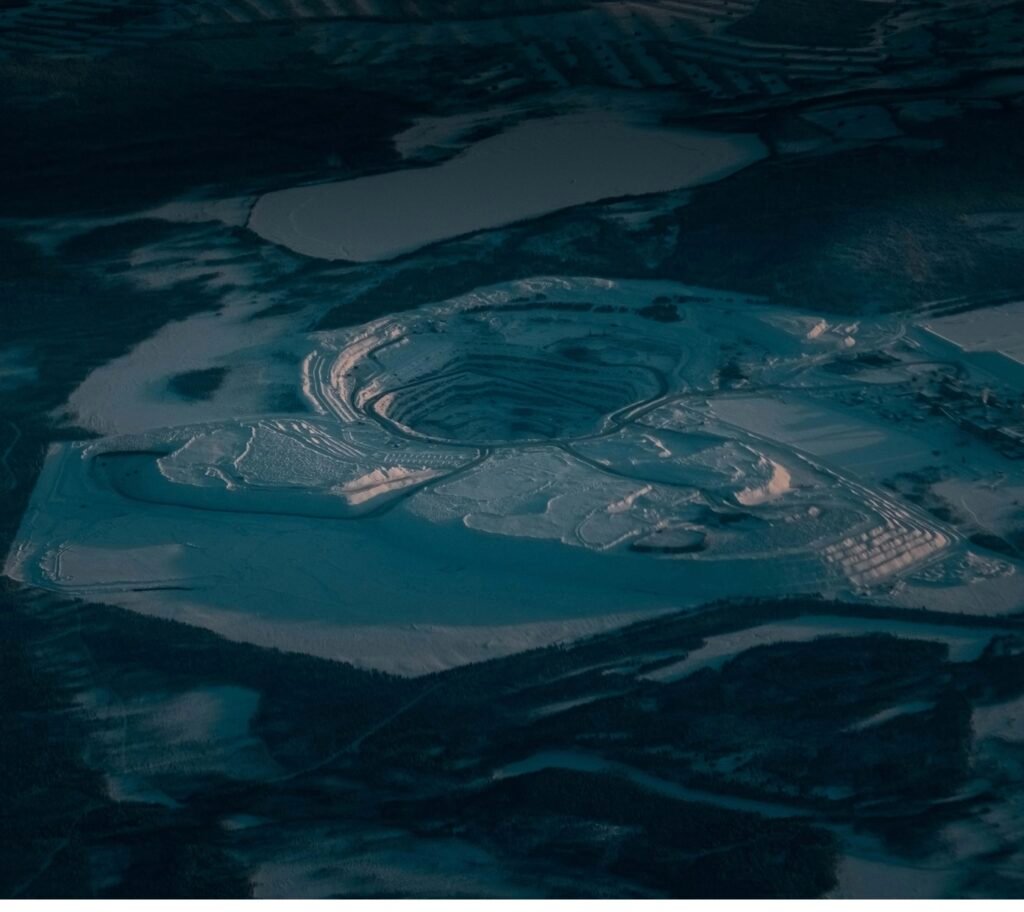
Based on the long history of sulphur mining in Sicily, which began as far back as ancient times, in the region north and east of Agrigento, particularly in the triangle formed by Sciacca, Enna, and Gela. primarily used for gunpowder production during the Middle Ages, and the production of sulfuric acid in the 19th century –the project will develop – through research and analysis, as well as the local connections along the FLUVIALE line with the ironworks in Blansko, the Czech Republic, and the mining town of Kiruna in northern Sweden.
The project examines the geological, environmental, structural, climatological and socio-political impacts, as well as the effects on the transformation and recoding of entire regions.
The essential methodology of the project is to establish a dialogue and connection between two geographical locations involved in FLUVIALE. Catania (Sicily) and Kiruna (Sweden) which are opposite to each other from the geodetic line expressed by the project, both geographically and culturally, but united by the presence of mines and the related activities and consequences.
Historical records from Sicily:
By around 1900, Sicily had become the global leader in sulfur extraction. The island operated 730 sulfur mines, most of them open-pit, where 38,000 miners, known as zolfatari, toiled to extract 3.4 million tons of ore. Yet, despite this economic significance, working conditions remained brutally harsh, largely unchanged since antiquity. The picconieri, or pickaxe workers, often employed children called carusi, aged between 7 and 16, to transport heavy loads of rock—sometimes up to 80 kilograms. The outdated mining techniques and lack of proper equipment frequently led to deadly accidents, including mine gas explosions. The oppressive conditions faced by the zolfatari drove them to become early advocates for workers’ rights.
The project stems from a personal work of Marcella Barone, implemented in Sicily on the sulfur mining area and the conditions of worker exploitation, including child labor, in those mines that affected part of the Sicilian population from the late 19th century to the 1970s.
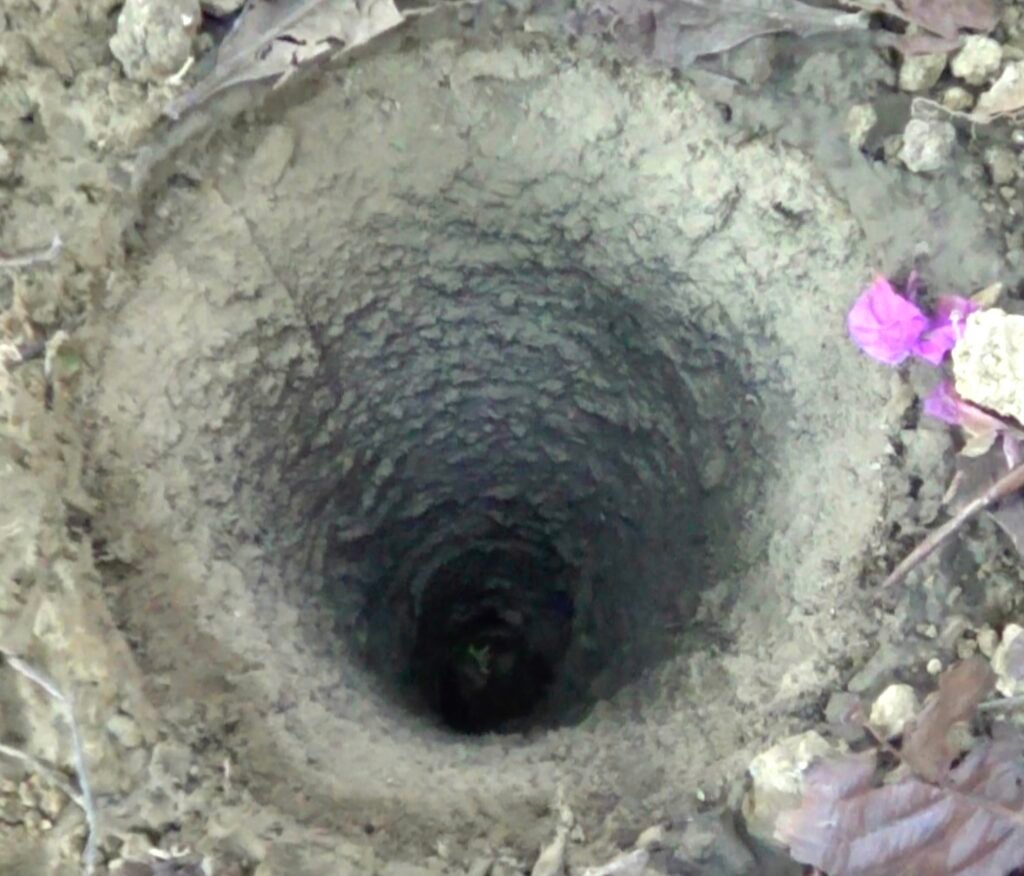
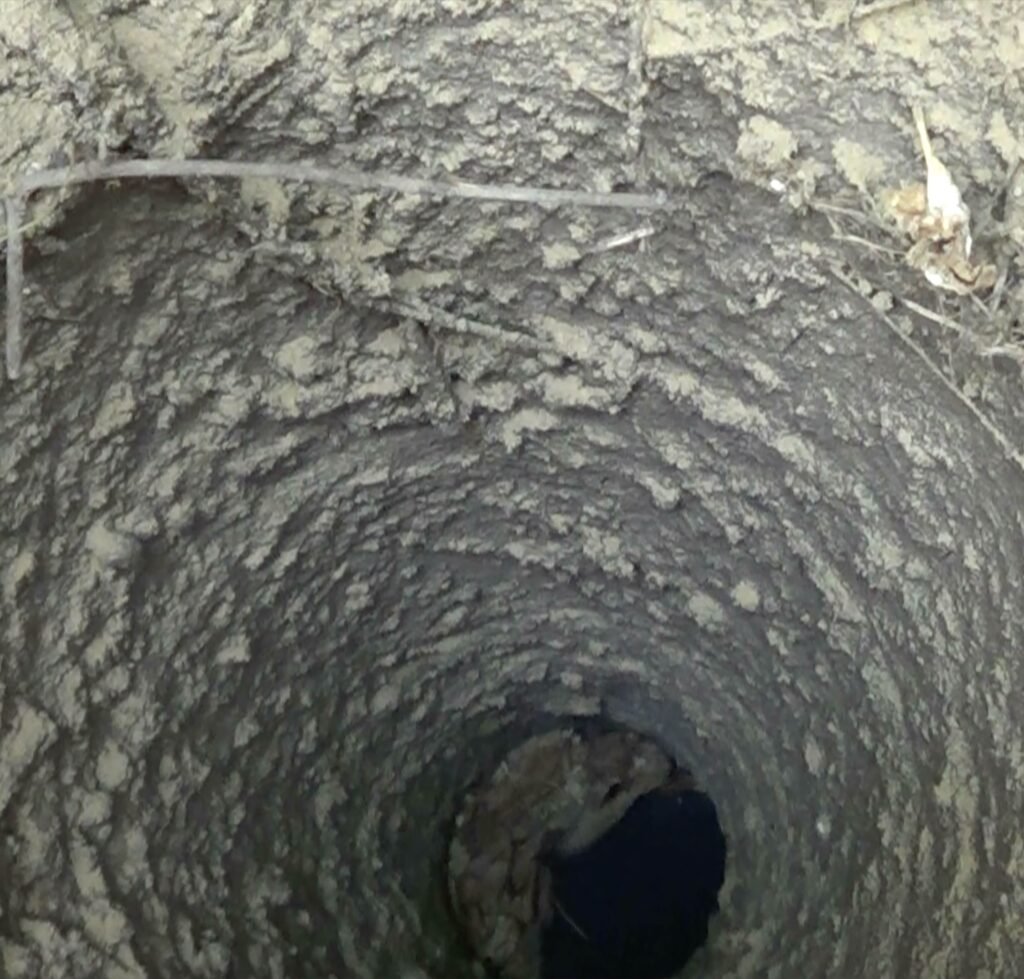
In the Garden, Palazzo Mazzone Alessi, Caltanissetta, Sicily, I developed a work entitled “under_breath” consisting in a site-specific environmental and sound intervention, a reflection on a private garden, a living lung and a sensory place, wich is perceived by the artist as a physical/aerial space. Silent witnesses of the underground world, the roots, invisible connections in the rhizosphere, are also a tribute to the underground circuits of the local mining system, the solfataras of the Fossa di Caltanissetta in a triangle with Enna and Agrigento. A chorus of breaths emitted by cones buried in several points, cones, or trumpets, which recall the so-called “sinkholes”, chasms, collapses of the ground in several points of that territory in correspondence with the now abandoned mines. A request for oxygen from that people of “carusi” (children) sacrificed to a life compared to holocaust conditions and often suffocated underground. <<
Marcella Barone

This work reflects too my interest and curiosity towards the chthonic dimension, the invisible part that lies beneath the earth’s surface, that submerged world in which there is still life, there is activity. This is why I believe it is a topic that can raise various reflections from both a scientific and poetic and metaphorical point of view.